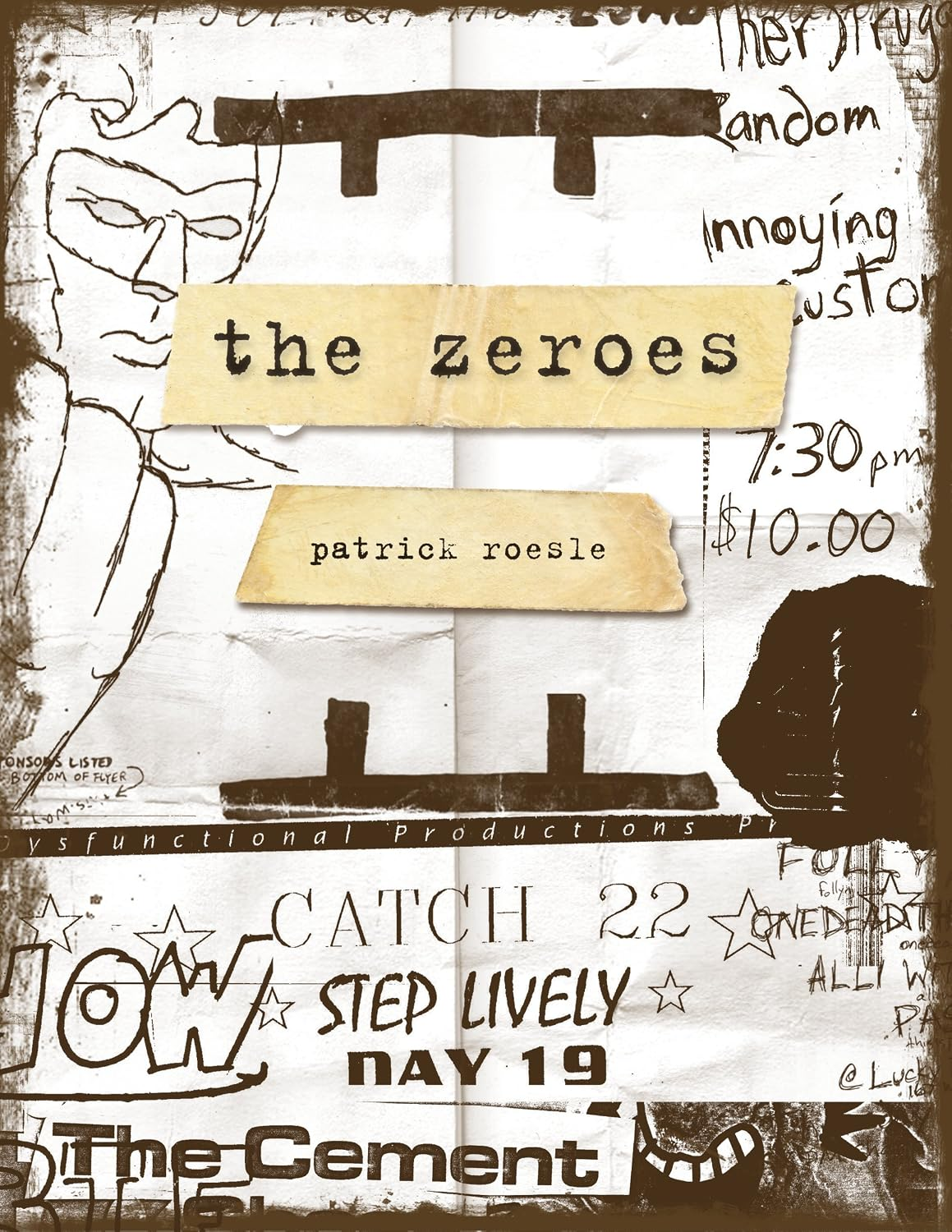
Patrick Roesle’s The Zeroes follows an aspiring comic book artist and his friends through the ups and downs of townie life in New Jersey across the better part of the 2000s. They graduate with grand plans and dreams of making art and music and moving on from their home town, and for the most part they don’t. The book’s pithy blurb is right on the money: this is a story about shit not working out.
After graduating from high school at the turn of the millennium, the unnamed narrator takes his first of many jobs working at the same mall around which he and his friends spend much of their teen years bumming, in the hopes that it will keep him solvent and help him share the cost of living with his single mom while he sharpens his art skills and sends his portfolio to comics publishers. Most of his friends are grinding away in the local music scene, working to make a name for themselves as ska, electronic, or industrial artists, and his girlfriend Stacy has gone to college out of state (you can see where that’s going).
The narrative documents the ups and downs (and downs) of their artistic pursuits, as bands form and dissolve and portfolios are met with rejection after rejection, along a winding path through dead end job after dead end job.
Brand names and cultural signifiers are called out with the kind of casual but laser-accurate precision that can only have come from experience. The specificity with which even the most ephemeral retail environments and pop-cultural products are related feels a little weird at first, until you get far enough into the book to understand that these bits of detritus are foundational to the environment that the author and millions of other American millennials grew up in, and separating our experience from the stew that we were cooked in is not just impossible, it’s dishonest. It’s straightforward about the plastic-and-styrofoam-strewn landscape that surrounds us in a way that few artistic products outside of the trash savants at Troma Entertainment (another creative spawn of New Jersey) can stomach, something like Don DeLillo’s White Noise but a couple decades hence.
The Zeroes layers slice after curdling slice of life on the reader until the lives of the characters start to collapse under their weight about three quarters of the way through. There’s a death that, if not shocking in a “you couldn’t see it coming” kind of way, still jolts you with its harrowing (and squalid) detail, which leads to some frustrated soul-searching and a climactic party scene that stretches for the better part of a hundred pages and genuinely took my breath away with its bad-dream momentum.
Overall it feels like the kind of book that might have had an easier time finding an audience during the personal essay/autofiction boom that came around about a half-decade or so after it was published. Then again, it’s a prickly work even by the standards of a “Negroni Season” or what have you. But for a reader with the constitution for its relentlessly bleak perspective, this unsung gem captures the restless energy of youth burning itself out thoroughly and unforgettably.


Leave a Reply