“In the drowsy dark caves of the mind dreams build their nest with fragments dropped from day’s caravan.” – Rabinandrath Tagore
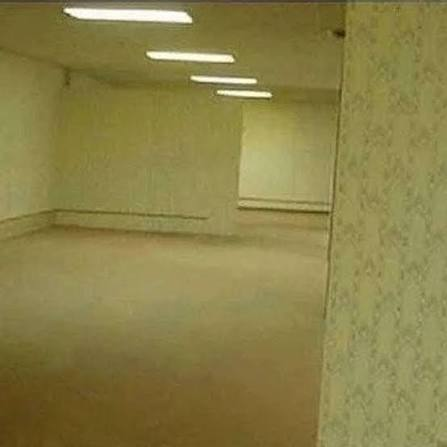
The backrooms in Backrooms could be metaphors for a lot of different things. This reads to me as an intentional choice on the part of the filmmakers, for a couple of different reasons. First, the storytelling meme that forms the basis for its source material has innumerable contributors, each of whom may have imparted their contributions with their own implicit meanings (unintentionally or on purpose), and in honoring this collaborative spirit it makes sense not to narrow down the scope into something that could be easily identified or even totally grasped by just one person. Also, the horror of the “liminal space” phenomenon is just more effective when you don’t fully understand the “how” of it.
Each individual character, though, brings their own baggage into the recursive reality where they find themselves, through which they interpret what is happening to them. Clark, the movie’s initial protagonist, is trapped in his own self-destructive cycles of alcohol abuse, blame, and isolation long before he stumbles into the pocket dimension in the basement of his store. And Mary, his therapist, has her own pattern of tying her self-worth to her ability to “fix” others, even those who do not want to be fixed, following the trauma of being unable to help her agoraphobic mother as a child.
The backrooms dimension is made in one way or another out of memories, but the memories are fragmented and fractured, a physical and visual representation of the limitations of our real memories. It’s uncomfortable to see, partially because if you look inward and question your own memories of events and of feelings it becomes quickly apparent how incomplete they are. The incompleteness of a memory, just like that of the environment within a dream, is not to say that it isn’t real (although of course memories can indeed be of unreal things), but a reminder both that a memory records only one individual perspective and that the pieces of it are those elements of the experience that we both observe and find significant, leaving so much undefined.
When Clark spends his life turning inward, his world gets smaller and smaller as his experiences are defined more and more by his memories of his own memories, which suffer from the copy-of-a-copy-of-a-copy degradation that naturally follows stubborn attachment to past events, whether they are positive or negative. The movie visualizes this grandly, showing how distorted and warped a memory-place becomes when the place he is isn’t reality or even a recollection of it, but recollections of rememberings as we move down, layer by layer. I feel like the closest the movie comes to being explicit about this is when we see a flashback to Mary’s childhood memories, followed by slow tilts downward through successive “backroom” versions of her childhood living room, each time with the details more skewed and off even as they seem superficially “safer.”
It’s the false safety that a retreat into nostalgia promises. This implicit critique of nostalgia is where Backrooms has the most bite. And it applies equally whether one is living in a “positive” or “negative” past period – either way, each cycle of remembering takes the subject further and further from the reality that they only fractionally experienced in the first place, and when this process corresponds with a ferocious attachment to the feelings that those times created (or that one might imagine, in their present state of mind, they felt), it becomes easier and easier to eat the substanceless fluff inside of the dream people who have replaced real friends and family and acquaintances and pretend that it is nourishment.
Thinking about Backrooms brings to mind Ted Chiang’s short story “The Truth of Fact, the Truth of Feeling, which explores a science-fictional future in which the option of perfect recall becomes available through technological advancement. The story digs deeply into how the incomplete nature of our memories makes us who we are, and makes a life bearable for conscious beings. Sometimes learning and growing as people and in our relationships comes as a result of the limitations imposed by our own individual perspectives. But those blessings can become curses when instead of applying the lessons we learn from our memories and experiences to our lives moving forward, we fixate on our past experiences, either because we love them too much to let them go or because we allow our mistakes to keep their claws sunk into us and drag us back into the same spirals.
Backrooms is a horror movie, so the growth and satisfaction that can come with leaving behind cycles of nostalgia and regret don’t come for Mary and Clark. If we are fortunate, we can learn from their mistakes.
This piece was originally published in the Centipede Press Newsletter.
 Soup Is Good Food
Leave a comment