“It seemed to him the problem was he was smart enough to ask the question but not smart enough to answer it. Then he thought maybe that goes for the entire human race.”
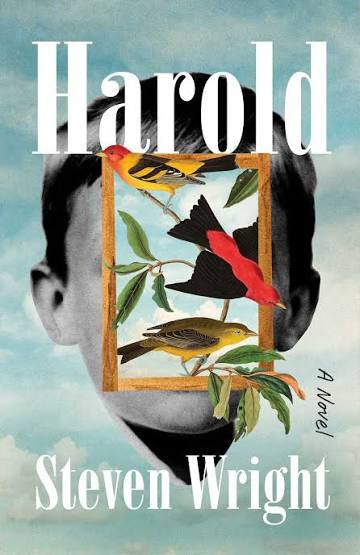
A little boy named Harold sits in his third-grade classroom in the mid-1960s and daydreams, when he’s not being interrupted by distractions like his teacher asking him questions. Harold has a grandfather he loves and admires very much, who fought in a war and who learned a lot from his Lakota friends which he taught to Harold during his summer visits. He also has a window in his head that birds fly through, carrying his thoughts.
Over the course of his afternoon, he imagines a sweet romantic walk with Elizabeth, a smart girl in his class, and then a trip to the moon with her and Carl Sagan where they talk about, among many things, the pale blue dot photo (the anachronism is acknowledged by the narrator with a “none of your business”). He makes mundane observations about life and school and his classmates, and he thinks about big questions, the kinda that people are smart enough to ask but not smart enough to answer.
Harold’s reveries are absolutely real to him, as much as anything that matters is real, and they matter more to him than much of what’s going on outside of his mind. The pretend grade-school courtship of his crush (or more accurately, his imagined version of her) means so very much to him, and he seems to really learn from the imaginary conversations they have. I’m sure I’m not the only person who read this book and was reminded of how much of their lives they used to spend living in their own little worlds, if we’re being honest with ourselves, how much even as adults we still do. Wright takes Harold’s imagination-world seriously because the experiences he has there have real meaning, and compels the reader to consider doing the same.


Leave a Reply