
Bosnia AND Herzegovina? In this economy?
an internet website
+
+
+
+
+
+
Bosnia AND Herzegovina? In this economy?
+
+
+
+
+
+
“AI cannot hunger or thirst. It can only regurgitate.“
So claims an insightful piece by Eleanor Russell, which illuminated to me a lot of the problems I have with the idea of “art” being generated by an unthinking and unfeeling machine, not to mention whether there could be anything worthwhile to experience in such a product. Says Russell:
The concept of AI actors reveals a malevolent paranoia. Rather than risk being confronted by a work of art that throws into question your way of living, you can have a lithe and large-eyed AI gyrate on the floor in exactly the way you have prompted her to. You will never be tricked into believing something you have not decided in advance you want to believe. AI is compelling to tech billionaires and their minions because it offers the fantasy of total control. They have found a way to conquer their phobia of humanity, which is by turning it into a malleable simulacrum. Of course, it looks like total shit and has, thus far, mainly been used to facilitate taking selfies with various action movie characters. The imagination of the average AI booster is so impoverished that they do not even dream of going on a high seas adventure with Captain Jack Sparrow, or assisting a heist with Ethan Hunt from the Mission: Impossible movies, or doing blow with Leonard diCaprio as whatever character they wish. The most they dream of is a selfie, a gesture to feeling included in a creative community they do not have the intellectual or creative capacity to ever really belong to. And so their greatest dreams look like total ass, because they lack the theory of mind to imagine anything but ass. It can’t create anything new, and therefore what these people are trying to call “AI performance” isn’t that, it’s a failed and abject imitation.
It’s hard to come up with a precise definition for “art.” To me, a non-negotiable part of the definition is that art is the creative expression of a human being’s unique perspective on the world they observe. When I approach a piece of art, I want to be challenged by it. Often, but not exclusively, in a way that causes discomfort or reshapes how I see the world.
There’s plenty of room, of course, for art that provides comfort and relief. But even artistic comfort food poses to its audience an inherent challenge, because it’s coming from another human being who is different from you. Their perspectives will at times contrast with yours. Their ideas will sometimes be alien to you. The way they look at the world is different from how you look at the world, and the friction of your perspective encountering another human’s creates both growth and pleasure. Conversely, encountering the product of a prompt designed to scrape together bits of data that it has been “trained” on in order to please the reader/viewer is solipsistic, sycophantic, and emptily masturbatory, providing neither the edification that comes with experiencing another’s creativity nor the pleasure that comes from an intellectual or emotional interaction with another being.
Creativity is work. To create anything demands that you open yourself up to the friction between your ideas, your outlines, your thumbnail sketches, and the exterior reality of what you can make with your hands and fingers and voice. Expressing (pushing out, like juice from a lime) your thoughts and feelings requires energy and strength and commitment. It’s hard! Many people who fancy themselves creatives recoil from the discomfort inherent in this process. Some feel that the ability of a large language model to whip up a simulacrum of human creativity based on an idea they wave at it is liberatory, freeing them from the work that would otherwise be required in order to be the artist they think they are. But an artist, a writer, isn’t something you can “be” in a static capacity. You are only an artist to the extent that you do art. You are a writer only to the extent that you write. The idea that you can be a creative who has freed yourself of the work of creation fundamentally misunderstands the meaning and the value of creativity as a human process.
Russell continues:
Figuring out what and who to believe is harder than it has ever been. If we are to find it, we have to do it together. Typing “make a pop song sung by a beautiful woman” into a prompt window, to the AI booster, is equivalent to writing “Call Me Maybe” by Carly Rae Jepsen. “Call Me Maybe” is a miracle of God. The reason these two things are equivalent to them is because they do not actually like pop music, because AI guys don’t actually like anything. They are anti-life. If art is to survive at all, we cannot cede an inch of ground to these fascist idiots. It’s a shame that the figure of the sociopath in popular culture is genius-coded, because the sociopaths who are attempting to structure our reality–art included–have rocks for brains. We have to remember this at all times.
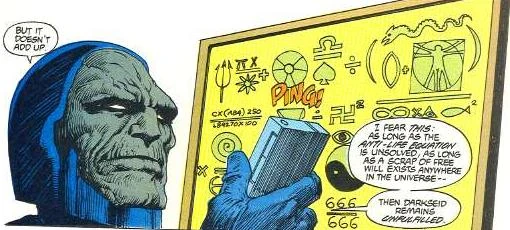
Her usage of “anti-life” recalls Darkseid, Jack Kirby’s personification of crushing fascist evil in his insane and wonderful New Gods comic book series. Darkseid is obsessed with solving the “anti-life equation”, a formula which will allow him to eradicate not breath, heartbeats, or the self-replication of DNA, but free will and thought. This is what Kirby recognized as vital to life: individual thought, feeling, and self-determination. The most evil being he could imagine devotes himself to snuffing out the capacity to create and express ourselves based on the ineffable essence of our unique souls.
Let’s not do it for him.
+
+
+
+
+
+
+
+
+
+
+
+
+
+
+
+
+
+

Every Saint Patrick’s Day, grade schoolers across America arrive to school bummed out to find that the leprechaun traps that they painstakingly worked on with their classmates have failed. The leprechaun(s) have once again broken out, leaving behind shamrock-shaped glitter and (if the kids are lucky) a chocolate coin or two.
Of all the holiday mascot traditions, this has to be the most disappointing one. They put their work, not to mention hopes and dreams, into finally catching one of those little fuckers, only to come up with bupkis year after year.
Santa Claus brings you presents. The Easter Bunny leaves a basket full of candy (and now also presents, apparently). The leprechaun leaves a mess for you to clean up. Fun.
I specified above that American children have this annual round of glitter sweeping to look forward to. This is because Ireland doesn’t have time for that kind of bullshit.
Elf on the shelf-ass made up tradition. SMDH.
+
+
+
+
+
+
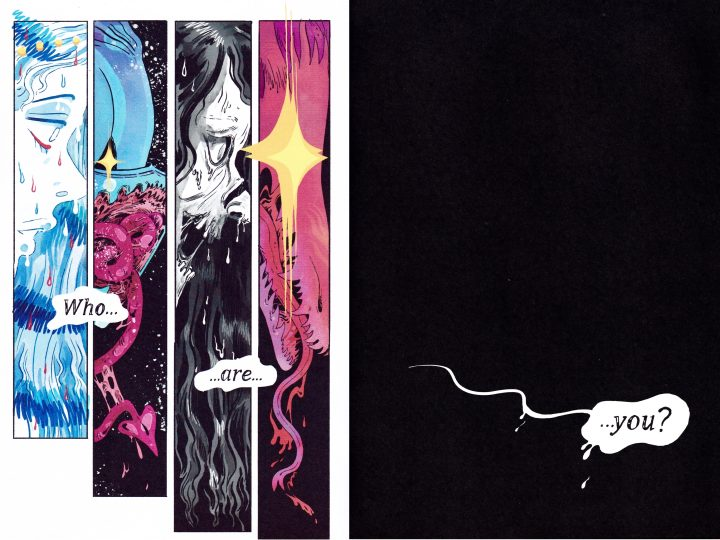
A Guest In The House
by E.M. Carroll
I loved the art. The careful use of color in the protagonist’s mostly black-and-white world conveys emotions powerfully. I like how ambiguous the ending was, both in not spelling out fully what happened as well as leaving a huge mystery about who or what the spirit could have been.
Cassandra at the Wedding
by Dorothy Baker
Cassandra comes home from her college life to disrupt her twin sister Judith’s wedding. At first it seems that she may have a romantic attachment to Judith, but as the story progresses it becomes clear that Cassie is gay, and she had been attached to the idea of living with her sister because she did not feel that she would ever be able to have love for herself.
Cassandra at the Wedding is a character study, but it’s also a remarkable family study. The Edwards clan is bookish, temperamental, deeply intellectual, and a bit too fond of alcohol for their own good. But even when they frustrate and aggravate one another I get a very strong feeling for how much they need each other, and that each of them would go to desperate lengths to care for each other as well. It made me reflect a lot on how much my family means to me, and how fortunate I am to have people who are so special to me and who are such brightly shining stars of individuals as well.
Mindbridge
by Joe Haldeman
A first contact story told largely through fragments of in-universe documents, communications, and historical records, detailing the life of the first person to communicate with an alien collective called the L’vrai.
The storytelling devices were used well, it moves very zippily along and sometimes we get a fragment from the relatively far future that succeeds in tantalizing the reader who is fascinated by deep time shenanigans. Characterization is not the main thing this story is about, focusing mainly on the systems and hypotheticals and leaving what character work there is to be mainly comic relief.
The L’vrai are to me a more realistic and interesting hive mind than something like the Borg – while they are advanced far beyond the concept on “individualism” they also do not seem to have any malice or greed, but a practicality that is beyond human conception (like if Vulcans were Borg lol). They also seem to be an evolution of the understanding that an individual is made up of a system of thoughts and feelings (not to mention cells) working in harmony, to the level that their “individual” is the whole of their populace, working in a possibly multi-dimensional harmony. The extra-dimensional stuff especially reminded me of the Three Body books, in a good way. I like stories that remind you of the limited fraction of existence you are able to perceive, and implore you to wonder what might be outside of it.
Dark Tales
by Shirley Jackson
Nobody does quiet menace like Shirley Jackson. I love her ability to make otherwise safe situations drip with dread. Some of the stories in this collection feel very fresh in their approach to weird lit too. They’d be right at home next to Kelly Link in an anthology. Potential spoilers below:
+
+
+
+
+
+
+
+
+
+
+
+
+
+
+
+
+
+
+
+
+
+
+
+
First: Ravi Shankar

I lucked into this one. When I was like six years old my parents had tickets to see Ravi in Iowa City, and a few nights before the show my sister broke her leg. My mom wanted to stay home with her instead of getting a babysitter, so my dad took me to the show instead. The music was amazing, but what I remember most about that night was feeling like I got to sneak in to Grown-Up World for a few hours. Quite the coup.
Last: Alanis Morissette

Still kinda can’t believe I finally got to see her live. Jagged Little Pill was such a huge part of my childhood and I’d always seen Alanis as this like, mythic figure, and she completely lived up to it while also coming across as totally human and relatable. Amazing show, 11/10.
Worst: Yellowcard

Total snoozefest, literally – I fell asleep halfway through.
Loudest: Dinosaur Jr.
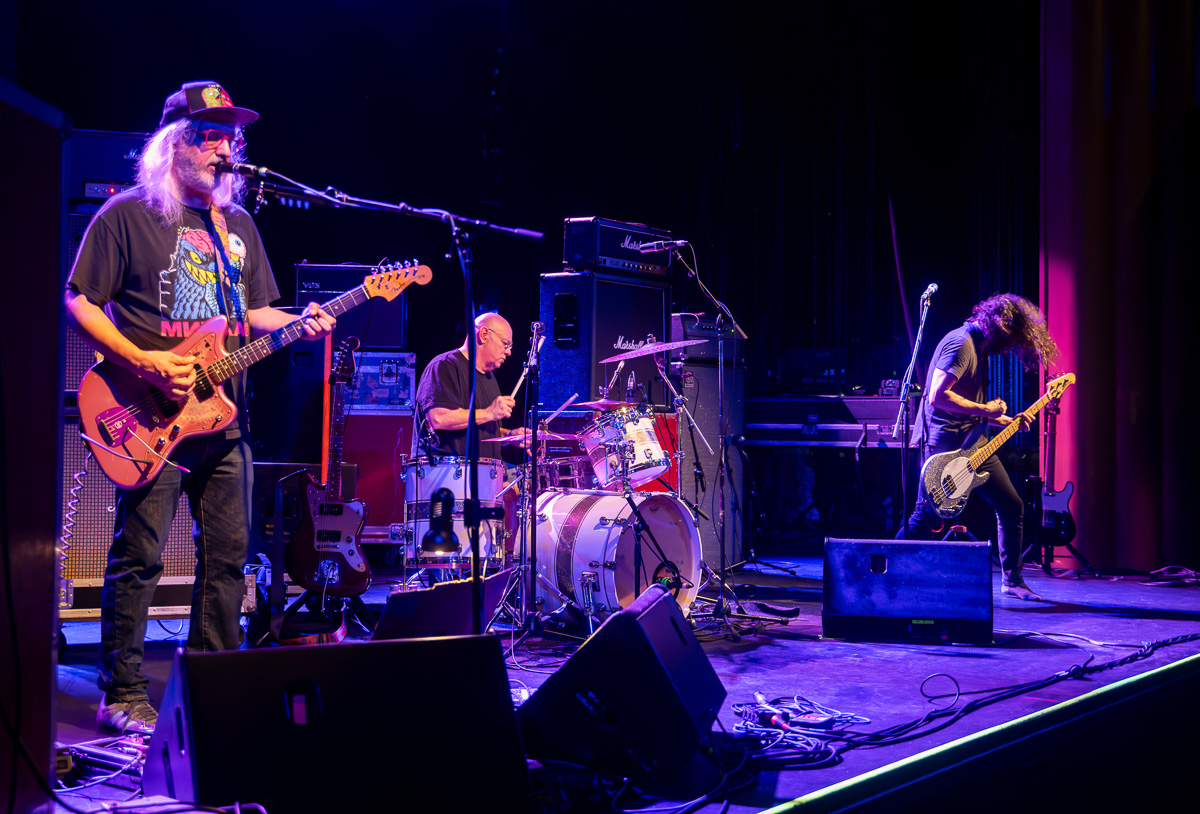
The first time I saw Dinosaur Jr. I went in with no earplugs and they shook my brain most of the way out. I had to go to work at Chipotle the next day and I could not hear anything that anybody was ordering. Hope they got the burritos they wanted.
Best: Ween

Every Ween show is something special, but I’d give the edge to the last time I saw them, at Red Rocks in August 2023. The band was playing super tight and grooving together really well, and it created a powerful vibe that encompassed the whole amphitheater.
Most Surprising: Wilco

I didn’t really know them, and I expected something less interesting than what they turned out to be. The show made me a fan.
Happy I got to see: Weird Al

I saw him on his second Ill-Advised Vanity Tour, where the setlists were all original songs and no parodies. It would have been worth it just to hear my favorite Al song, “Why Does This Always Happen To Me?”, which was incredible, but the rest of the show was just as great. They closed with a straightforward cover of REM’s “End of the World”, so I finally got a chance to yell LEONARD BERNSTEIN along with a packed audience.
Wish I’d seen: Arrogant Sons of Bitches

Jeff Rosenstock live is a treat no matter what year it is, but I never even heard of him until long after his early high-energy ska band was in the past.
+
+
+
+
+
+

I became a blog addict because I was a kid who loved movies. In the early 2000s, the movie blogosphere was a very exciting place for developing nerds to find themselves. The first movie website that I got really into was the AV Club, back when Nathan Rabin, Keith Phipps, Tasha Robinson, Scott Tobias, and the rest of the original crew were there. I was already a devoted reader of the AV Club supplements from the old print Onion, so it was a natural transition to their website. Plus, one of my best buddies was a big fan of the site as well, so it provided frequent conversational fodder, that led to more reading on the site, and so on.
When I would run out of AV Club articles to read (and once I had finished poring over the IMDB trivia listings for every movie I could think of) I started looking around for other places to get my movie fix, and the big one that really stuck for me early on was CHUD (Cinematic Happenings Under Development). Founded by aspiring movie producer Nick Nunziata, CHUD had an irreverent editorial bent that gave it the “edge” my teenage self craved and employed a lot of great writers, including Jeremy Smith and massive asterisk Devin Faraci, who wrote a LOT for the site, from reviews to opinion pieces to an obsessively detailed series of pieces on each individual Star Trek episode called “Star Trekkin”. No other site at the time (at least not one that an immature Midwestern teenager like myself was aware of) featured the combination of breaking news and set visits with timely reviews of new releases and interesting pieces about older films that CHUD had.
There were plenty of other movie blogs doing brisk business at the time, and since they were all competing for scoops in the same news ecosystem, you couldn’t read CHUD without finding your way to plenty of others. I was soon spending time on Collider, JoBlo, Latino Review, and the 800 pound gorilla of the scene, Ain’t It Cool News.
Ain’t It Cool was, in the parlance of our times, a land of contrasts. The site was built on the success of its scoops and insider Hollywood information, gleaned from industry professionals and a cultivated “spy network” of production assistant-types and test screening-attenders, and on any given day along with the news you might find great and thoughtful pieces from pseudonymous writers like Quint (Eric Vespe), Massawyrm (C. Robert Cargill), Moriarty (Drew McWeeny) or Mr. Beaks (Jeremy Smith, also of CHUD) alongside Harry Knowles’ aggressively terrible movie reviews and a thoroughly insane comment section. But Harry owned the site, and it was his connections that kept it running, so he got to post as he pleased.
During the site’s prime, it really did do a great job of making the world of movies (and to a lesser extent, TV and comics) feel alive, exciting, and accessible. Looking back on it now, that particular corner of the internet blogosphere also reinforced a very dude-centric perspective on movie fandom and culture, which I didn’t even really notice at the time. Astute readers will notice that all of the writers on all the non-AV Club sites that I just mentioned were guys. Self-educated in the world of movies, in the mold of their idols like Quentin Tarantino, they wrote without much seeming awareness of their cultural blind spots – most of the movies that got the heaviest coverage were American, and targeted at an audience of young men. When the coverage broadened, it was often to include similar demographic fodder like Asian action movies and French extreme horror. There’s nothing wrong with any of those subjects, but when they make up such a large portion of your cinematic worldview they can lead to a kind of tunnel vision that leaves out a lot of other worthy art by many other worthy artists. It can also have an impact on your real world worldview, leading to a tendency to see men’s stories as the important ones by default and, if not necessarily discounting stories by and about women, perhaps not thinking about them much at all.
Devin Faraci left CHUD to kick off a movies and culture blog for the Alamo Drafthouse: Badass Digest, later renamed to the more marketing-friendly but punctuationally frustrating Birth.Movies.Death., which massively expanded his personal profile. Alamo had a lot of cachet as the “cool” movie theater chain, which landed Devin the kind of access to the world of Hollywood that he had only dreamed of before. It went to his head. He’d always been an opinionated snarker on blogs and message boards, but in his new position as a geek-film kingmaker he became downright abusive in the way he bullied his critics and “enemies” over social media. His notoriety also led to the exposure of a sexual assault that he’d committed years before, after which he was “fired” from his editorial job while remaining active behind the scenes at the Drafthouse organization writing copy. When this closed-doors employment arrangement was exposed, the reputational hit to the company led to the soon-after shuttering of Birth.Movies.Death. Though to be fair, the site was already floundering for a new identity after having built so much of its brand around Faraci’s personal voice.
Around the same time, the other one-time king of the movie nerd internet had to take responsibility for his own nasty history, when Harry Knowles was exposed as a serial sexual harrasser, having behaved abominably toward seemingly every woman who came anywhere close enough to him at a film festival or screening to be groped or subjected to lewd verbal assaults. Ain’t It Cool was already deep in decline at that point, having long since lost the talented writers who made the site worth visiting and ceded its cultural relevance to Badass/BMD and their ilk, but Harry’s downfall put the last nail in the coffin.
One site that Faraci hated was Gawker, which should have been an early red flag about his personality. I started reading Gawker in the late aughts, and before long my Google Reader feed was filled with Gawker and its suite of sister blogs (Deadspin, Lifehacker, Gizmodo, Jezebel, Kotaku, er… Fleshbot…). You started following Gawker blogs because they were consistently entertaining, often salacious, and always a delight to read, and over time they grew on you as you grew with them. They expanded your worldview and introduced you to new things you might never have tried – I got hooked on Deadspin because of the quality of the writing, and over time grew to understand what their subject matter (sports, primarily) meant to the writers as people, and gained an appreciation of sports and sports culture that I never would have had otherwise.
Gawker was also an incredible talent incubator. Site alums founded or contributed heavily to some of the Internet’s most beloved blogs – The Awl, The Hairpin, The Toast, and Popula to name a few, and have become bestselling authors (Danny Lavery, Jia Tolentino and Jason Schrier, among others) and even a New York Times Styles section editor in Choire Sicha.
The Gawker sites covered a huge variety of subject matter in many very different ways, but the driving ethos behind all of the sites was simple: tell the truth. You had Gizmodo reporting on the reality of what was going on behind the shiny PR of tech companies, Lifehacker helping readers improve their daily lives by gaining a deeper understanding of the tools and habits they rely on, Jezebel pointing out the ways that our mainstream media landscape degrades its subjects and shames its consumers, Deadspin piercing the veil of access journalism that held a tight grip on our understanding of the world of sports, and Gawker itself, a gossip blog, eschewing tabloid fabulism in favor of truly uncomfortable truths about the worlds of media and celebrity and coming up with a product orders of magnitude more compelling than its predecessors. Gawker’s defining post tag was “How Things Work”: at their best, posts on the network tried to understand a subject from the inside out, and to explain what the writer knew and learned about it in a truthful way, including acknowledging the truth of the writer’s own subjectivity.
This extended to Gawker Media’s proud tradition of reporting on themselves. The “Journalismism” tag, another popular one on the sites and their successors, covered reporting on mainstream and fringe media, and it was also used by writers on the sites to air their own dirty laundry. The most famous example of this is probably Megan Greenwell’s The Adults in the Room, her piece about what it was like trying to edit Deadspin while being micromanaged by their private equity ownership, and this article represents well the spirit that Gawker Media bloggers carried forward. It also led to the end of her tenure at the site, and not long after to Deadspin’s de facto shuttering when all of the rest of the writers walked out in protest of those same owners.
After the downfall of the main Gawker site, prompted by a lawsuit from Hulk Hogan over their publishing of a sex tape of his (and funded by Peter Thiel in revenge for their coverage of his personal life), the company was sold off to Univision, which added a politics site (Splinter), then sold the whole package again to a dunderheaded private equity concern that was convinced by their “success” in transforming Forbes magazine into a hollow but lucrative content mill that they could turn Deadspin into the next ESPN and Kotaku into the next IGN. The new owners had no idea what readers valued about the site (they were there, and not on ESPN or IGN, for a reason), and seemed hostile to the idea of anything other than profit having any “value” at all, and made such a mess of their new properties that they wound up either losing all of the writers people went to the sites to read – Deadspin writers, for example, formed Defector together after leaving their previous job en masse, and Kotaku’s writers moved on to a new collective as well – or parting them out and selling them off to companies that were at least marginally interested in running actual media concerns, like their sale of Jezebel, Splinter, and the AV Club, which they had also acquired via their Univision purchase, to Paste Magazine. Gawker itself was briefly relaunched by Bustle founder Bryan Goldberg, who proved to be more game than expected to the Gawker spirit. But ultimately his investment in the site was financial rather than spiritual, and after a couple of years of delightfully mischievous posting it was shut back down.
Many of the writers whose work populated the best of those blogs have struck out on their own. Most of the old AV Club staff left to create the amazing and sorely missed site The Dissolve for Pitchfork, and after Dissolve dissolved moved on to critic-in-residence positions at legacy magazines and Patreon/Substack sites like The Next Picture Show and The Reveal. Max Read of Gawker maintains the subscription site Read Max and Gawker/Splinter/Deadspin all-star Hamilton Nolan writes reported pieces and opinion blogs at on his own platform, appropriately titled How Things Work.
+
+
+
+
+
+

Stories about characters like Punisher that dig deep into the grimmest, darkest grim darkness are, Frank-ly speaking, a dime a dozen. It takes a writer like Garth Ennis, with a vile and blackhearted sense of humor and a grotesquely sprawling imagination, to make one of these stories feel like something special.
Welcome Back, Frank may move with the rhythm of a sleazily efficient 80s action movie, but the thing that sticks out the most to me about it is how funny it is. The action setpieces are structured around violent visual punchlines that showcase Punisher’s gruesome ingenuity. It’s a little like a creative slasher movie (think mid-period Friday the 13th), but you’re watching lowlife mobster types, instead of horny teens, get knocked off, and there’s more explosions.
Dillon’s dramatic action angles combine with his excellent page layouts to create a propulsive reading experience. It really moves.
The story is pretty standard Punisher stuff – he’s eliminating a mob family mook by eviscerated mook, being surveilled by the cops all the while, and trying to maintain a low profile. The collection of weirdos with whom he shares an apartment building give his po-faced grimness a welcome bit of colorful contrast and lighthearted comic relief, kinda like Batman’s extended family if Batman was an even bigger psychotic asshole than he already is.
The copy I picked up from the library has this warning sticker on it:
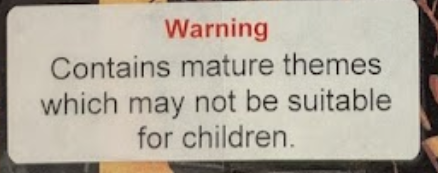
Which made me chuckle a bit. It certainly contains material that is not appropriate for children, but this is a Garth Ennis joint, so it’s about as far away from a mature theme as Frank Castle is from a stable, healthy life.
+
+
+
+
+
+
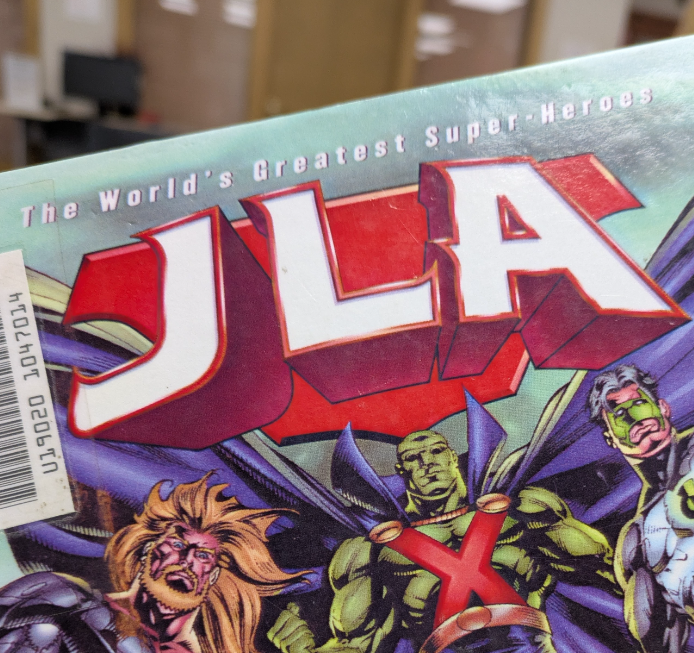
Team-up books can be a lot. Morrison leans hard into the just-too-muchness of an all-in Justice League story by following news broadcasts and other mass communications from place to place and character to character, creating a pulsing rhythm that kept me engaged where I sometimes find my interest drifting in these types of stories. Well done!
+
+
+
+
+
+
+
+
+
+
+
+
+
+
+
+
+
+
+
+
+
+
+
+
Sarah Wynn-Williams began her career in diplomacy and international relations. At the UN, she found herself working with other bureaucrats who got into their line of work because they care – about peace, about climate and our environment, about improving quality of life for people around the world. She also found that the organization she was a part of was devoting a large share of its energy to petty arguments over matters of little consequence. When she saw Facebook beginning to become a powerful political force, she left to work for the company as an envoy to governments and world leaders.
When she got there, she found that Facebook’s leadership had very little understanding of what roles their company was playing socially and politically, and she took it upon herself to try and educate the people she was now working with about how they could better relate to the human beings and societies they served. She worked under the assumption that her colleagues and bosses may have been naïve about human concerns due to their technology and business backgrounds, but that given Facebook’s high-minded, even utopian, rhetoric and stated goals, her co-workers cared about the consequences of their work and about making the world a better place.
Boy, was she wrong.
When she brought up instances of lawbreaking that the company was engaged in, her leadership responded by trying to hide or obfuscate their illegal activities (when the laws in question belonged to the US or other powerful nations) or just flat out ignored them (when the country in question was poor, small, or provincial enough for them to deem beneath their concern). Faced with the ugly real-world consequences of their ad-targeting tools being used to take advantage of people in vulnerable emotional states, the primary response was to incorporate the effectiveness of this manipulation into their sales pitches to potential advertisers. After Facebook’s products were used to amplify the power and reach of authoritarians and influence the outcomes of elections for the worse, Zuckerberg toyed with the idea of using his platform to run for president.
The carelessness of these and (numerous) other terrible things the company has been responsible for is more than just a lack, I think. It’s the expression of a philosophy. The belief that the pursuit of wealth and power is what matters in the world, and that anything standing in the way of their individual pursuits is not just unjust but irrelevant. That rules don’t matter if you have the power to ignore them. That having our needs met as human beings is not a right, but a prize to be won. It’s “getting yours” as a be-all and end-all.
It’s a nihilism of convenience, masquerading as rationalism and objectivity. Adopting the position of cool aloofness that money is morally neutral, that business is apolitical, provides an easy way around the difficult questions of what one must do as a moral actor when all that power falls into your lap. And once you’ve dispensed with any notion that the rule of law is good or right, you might prefer dealing with authoritarians, dropping the pretense that you respect any rules you find inconvenient and exercising your power transactionally.
If they are careless (they are) it’s because caring is something they don’t believe anybody should have to do.
+
+
+
+
+
+
+
+
+
+
+
+
+
+
+
+
+
+
+
+
+
+
+
+
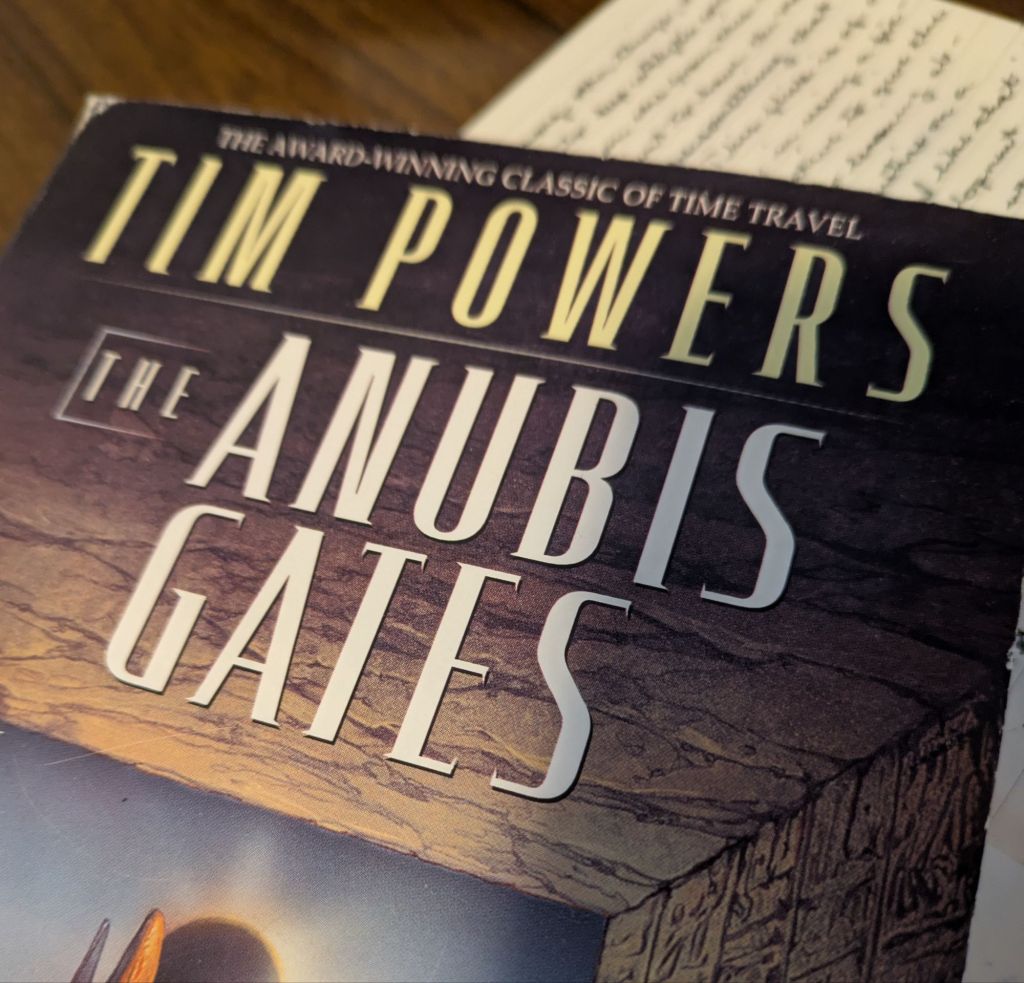
I love to read a time travel story that’s as well thought out as this one. While tearing through the fast-paced plot, you’ll notice over and over again that something that was set up earlier without even appearing to be foreshadowing thunks perfectly into place. Using the inherent limitations of historiography as a framework, the story does a great job of refusing to provide any simple conclusions about free will or determinism, while remaining certain that individual choices have real meaning.
The way magic works in this book is mysterious, rigorous, consistent, and satisfyingly dangerous. There’s always a grave and personal cost to using it, and no characters ever finagle any easy outs to get around those costs.

